

Self-Etch or Total-Etch: Do You Need a Different Bonding Agent?
HugeBond Universal is a universal bonding agent designed to support three adhesive techniques: self-etch, total-etch, and selective-etch. In restorative dentistry, selecting the appropriate bonding technique is an important consideration for achieving reliable adhesion. Each clinical case presents different enamel and dentin conditions, as well as specific adhesive requirements, meaning that a single approach may not always be suitable.
In some cases, dentists may prefer the self-etch technique to simplify the adhesive procedure. In other situations, total-etch or selective-etch techniques may be more appropriate depending on the restorative requirements.
However, this raises an important question: Does switching between these techniques mean that dentists also need to change their bonding agents?
Advancements in dental adhesive materials now allow a single product to be used with multiple etching techniques. One such innovation is the universal bonding agent.
Understanding the Differences Between Self-Etch, Total-Etch, and Selective-Etch
Before selecting a bonding agent, it is important to understand the differences between the three adhesive techniques commonly used in restorative dentistry.
1. Self-Etch: A Simpler Application Procedure
The self-etch technique utilizes adhesive materials containing acidic monomers that interact with the tooth surface without requiring a separate phosphoric acid etching step.
This approach can simplify the bonding procedure, particularly on dentin, because the conditioning process occurs simultaneously with adhesive application.
However, the effectiveness of enamel etching remains an important consideration, especially when working with unprepared enamel surfaces.
2. Total-Etch: A Separate Etching Procedure
Unlike self-etch, the total-etch technique, also known as etch-and-rinse, involves applying phosphoric acid to both enamel and dentin before the bonding agent is applied.
This technique creates an etching pattern on the enamel surface that supports micromechanical retention.
However, its application requires careful attention to etching duration, dentin moisture control, and proper application techniques to minimize procedural errors that could compromise adhesive performance.
3. Selective-Etch: Combining Two Approaches
The selective-etch technique involves applying phosphoric acid exclusively to the enamel surface, followed by the application of a bonding agent to both enamel and dentin.
This approach aims to provide the benefits of phosphoric acid etching on enamel while avoiding unnecessary acid etching of dentin.
The selection of these three techniques should be based on clinical conditions, restoration type, and the characteristics of the adhesive system being used.
Does Each Etching Technique Require a Different Bonding Agent?
With conventional adhesive systems, product selection is often associated with a specific application technique. As a result, dentists must ensure that the bonding agent is compatible with the intended restorative procedure.
However, advancements in dental adhesive technology have introduced a more flexible solution: the universal bonding agent.
Universal bonding agents are designed to accommodate multiple adhesive strategies, allowing dentists to switch between different etching techniques without necessarily changing products.
This flexibility can simplify material management and help dental professionals adapt their restorative workflows to different clinical situations.
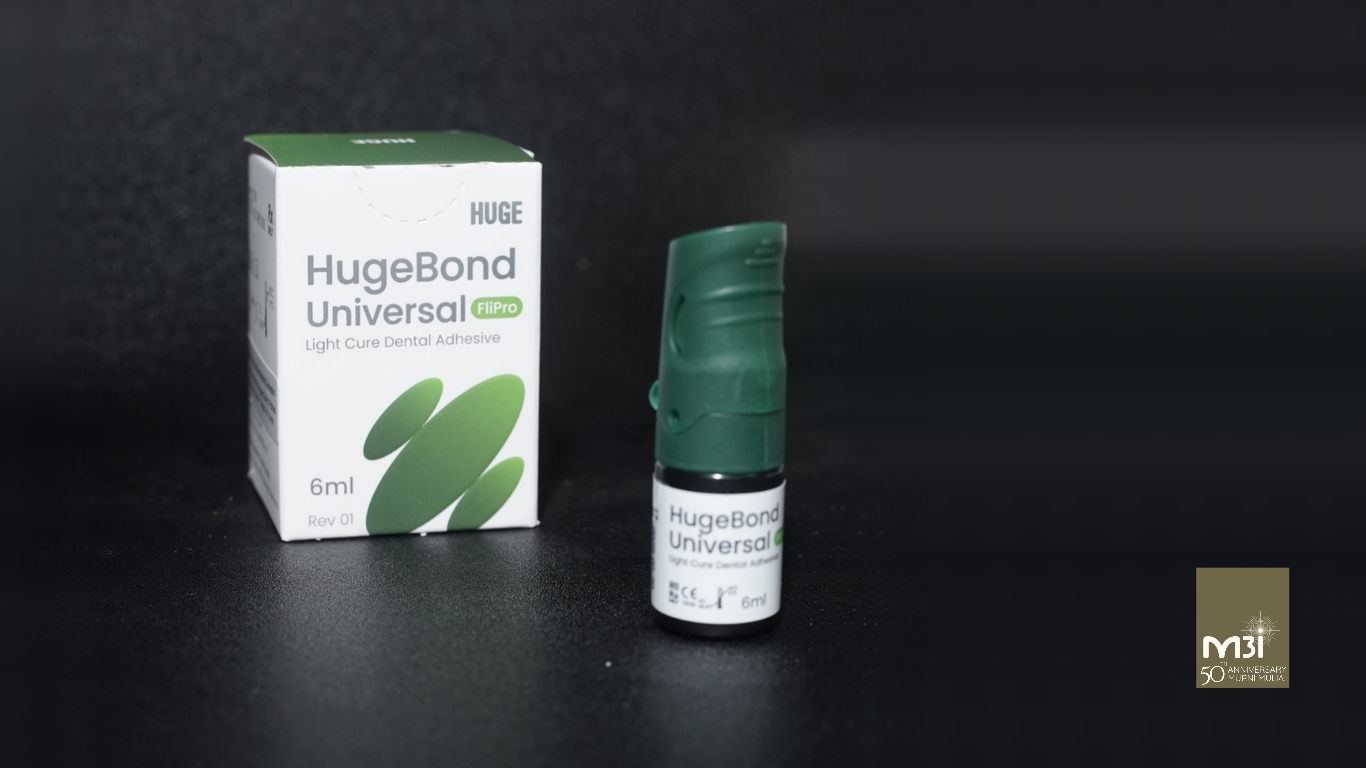
One universal bonding agent that supports all three techniques is HugeBond Universal from HUGE Dental.
HugeBond Universal: One Bonding Agent for Multiple Restorative Techniques
HugeBond Universal is a single-component, light-cured universal adhesive designed to support both direct and indirect restorative procedures.
This dental adhesive allows dentists to utilize three bonding techniques within a single adhesive system:
Self-etch: Applying the bonding agent without a separate phosphoric acid etching procedure.
Total-etch: Applying the bonding agent after etching both enamel and dentin.
Selective-etch: Applying the bonding agent after selectively etching the enamel surface.
With compatibility across these three approaches, HugeBond Universal provides flexibility in selecting an adhesive technique according to the requirements of each clinical case.
Its single-bottle system also helps reduce the need to maintain multiple bonding agents solely to accommodate different etching techniques.
Contains MDP Monomer to Support Adhesion to Various Substrates
The advantages of HugeBond Universal extend beyond its flexibility in application techniques.
The product also contains MDP monomer (10-Methacryloyloxydecyl Dihydrogen Phosphate), a functional monomer that supports chemical bonding to certain dental substrates.
The presence of MDP allows HugeBond Universal to be used in adhesive procedures involving various substrates, including:
Enamel: Supports adhesive bonding to the tooth's enamel structure.
Dentin: Promotes adhesion to dentin tissue.
Metal: Can be used with compatible metal-based restorative surfaces.
Zirconia: Supports chemical adhesion to zirconia-based restorations when appropriate surface preparation is performed.
Composite Resin: Supports adhesive procedures and composite restoration repairs according to the product's indications.
This compatibility with different substrates provides additional value, particularly for dentists who perform a wide range of restorative procedures in daily clinical practice.
However, bonding to materials such as zirconia and metal still requires appropriate surface preparation according to the manufacturer's instructions. For glass-ceramic materials, a suitable ceramic primer is also required.
Greater Flexibility, but Proper Application Still Matters
Using a universal bonding agent does not mean that every restorative case can be managed with an identical procedure.
Each adhesive technique still requires careful clinical consideration, including tooth structure conditions, etching strategy, isolation, and the characteristics of the restorative material.
The same principle applies to HugeBond Universal. Although it supports multiple etching techniques, its application procedures and light-curing requirements must still follow the manufacturer's instructions for use.
Therefore, the value of a universal bonding agent goes beyond the convenience of a single-bottle system. It also lies in the ability of the adhesive system to accommodate different clinical approaches while supporting restorative workflows.
HugeBond Universal: A Practical Bonding Solution for Dentists
Different restorative requirements do not always mean that dentists need to use different bonding agents.
Through its compatibility with self-etch, total-etch, and selective-etch techniques, HugeBond Universal offers flexibility within a single adhesive system.
Combined with its MDP monomer content, which supports adhesion to various substrates, the product provides an adhesive material option for a wide range of restorative dental procedures.
Interested in learning more about HugeBond Universal?
Explore HugeBond Universal and other dental material solutions available through M3i Dental.
Visit the M3i Dental website to discover products suited to your clinical practice needs.
